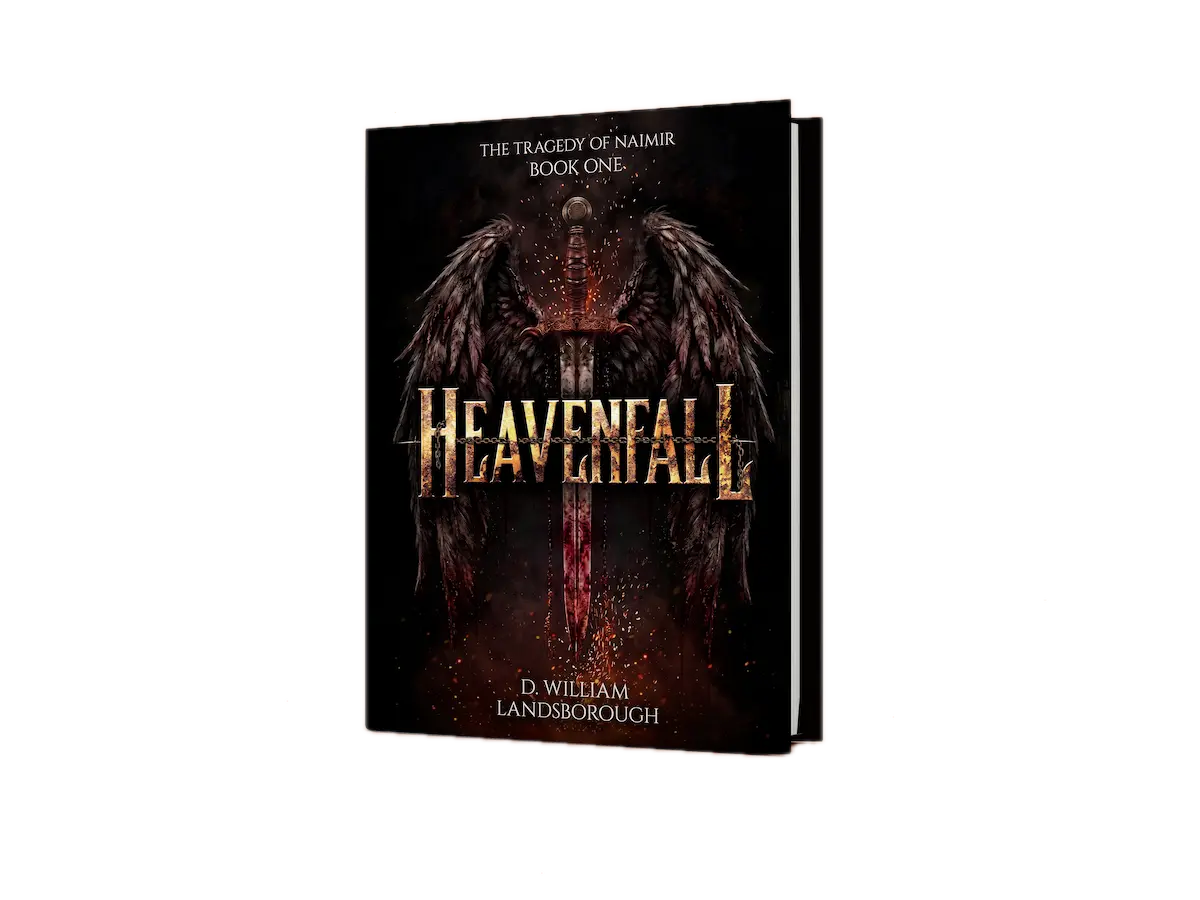
Adriel's Notes (Archangel and Revelations Recap)
Found among Adriel’s copious notes.
I do not know why I am writing this. Perhaps it is to make up for the disappointment of the past year. One experiment after another failed. Too many rabbit holes descended that have come up empty.
I am telling myself it is because these events deserve to be chronicled. It is unclear whether the black clouds prevent Metatron from looking down upon us to record what is happening in Heaven’s archives. Even if those clouds do not linger above Eden, their effect is still present to some degree.
If that is the case, then let this note be an official record of what has transpired since Uriel the archangel descended to Earth.
Such an event was so important because it should have been impossible. A decade after the war between Heaven and Hell started, this planet has fallen. Earth now lays firmly in the grip of Lucifer and his demons, and the Apocalypse has happened.
Not the way we thought it would, though. Not the way it was supposed to.
This is not a chronicle of that decade, though. For whoever reads this, I hope you have no idea what those years were like nor what it felt like to live under the black clouds the deceiver conjured. Those clouds cut us off from home, both physically and ethereally.
We could not return nor could the remaining legions send reinforcement. Worse, our powers are muted on this planet. The connection to their source is smothered by those clouds. With it flickering at best, we angels have had to rely on our talents—the innate abilities unique to every angel—and these physical forms we adopted when we descended to Earth. Uriel, the Fire of God, an archangel of some renown, was the only warrior of Heaven who has been able to break through those dark clouds. So he did after that long decade, finding an Earth he did not recognize.
Once we were isolated, it did not take long for the hordes of Hell to cement their rule over mankind. Entire cities were raised from the depths of the underworld, dragged into this realm to house the highborn nobility. A new world order was established, one enforced and ruled by demons, one where humans were subjugated. One where angels were hunted to near extinction.
This is the world Uriel found himself in when he descended. There was no legion to greet him nor any way for him to understand what had changed since his view of Earth had been cut off. What he felt, as he has since told me, was a great evil in the distance. And so he walked.
It was on the way to that evil when he came across a ramshackle cottage. Not of note, save for the fact that it was still standing in such an arid, hostile climate and the sense of innocence he felt radiating from inside.
This was the home of Shandra and Elena, twin sisters who could not have been more different. Both were born seven years prior under the black clouds, to a woman who I have only heard incredible things about since. Their father, however, was a beast of Hell.
Shandra, you see, is a cambion. A half-demon, half-human who looks much more like the latter part of her ancestry, save for her telltale crimson eyes. Her sister, Elena, was born completely human, though, thanks to a miracle performed by an angel who found their mother on death’s door.
As a result, Elena aged and grew as a human did. Shandra, on the other hand, had complete access to her mother’s memories. She lived an entire life through the connection the demonic part of her shared with her mother. And when she was born, she matured to adulthood in a few years.
This is the strange situation Uriel found: a fully grown cambion protecting a human child, claiming to be twin sisters. An abomination, by Heaven’s own decree, shielding that source of innocence.
It was because of Elena that Uriel did not smite Shandra where he found her. Instead, the pair forged an unlikely alliance. Shandra agreed to lead Uriel to Zezurat, a demonic city ruled by the highborn Botis, in exchange for her life. The pair left Elena in her home, safe in their cottage covered in runes—carved by Shandra and her adoptive father, Hadriel—while they were away.
It was unknown to us at the time, but there were two others making their way to Zezurat, as well. Two humans, a man and a witch. We do not know their names, but we know what their purpose was: to hunt angels.
Shandra led Uriel into the city through her preferred route, which unfortunately for the archangel was the sewers. Despite being half demon, cambions are not welcomed by their infernal progenitors. They are looked down upon, abused, and murdered for the half of them the demons view as weak. So the sewers were an ideal route for Shandra to get in and out of the city when she needed to.
Unbeknownst to her, it was also where a group of angels had taken up refuge. It was in these sewers where Uriel and Shandra encountered Raphael—not just an angel, but another archangel and Uriel’s brother.
Trapped under the black clouds for years, Raphael had gathered those angels he could find and helped us—for I was included in that number—find a place to survive. Aptly named Sanctuary, it was a refuge we carved out from the stone beneath Zezurat.
Sanctuary is where I laid eyes upon the pair for the first time. While many of the other angels were wary—even angered—by the sudden appearance of Uriel and his half-demon companion, I felt the first flicker of hope in a very long time. I know my… I know Isniir felt the same.
Inspired by Uriel’s reappearance, Raphael wasted no time in acting. For years he and Fariel, his right hand, had been planning ways to rekindle the war against the demons. It was the first move in a guerilla campaign, one that sent us—with Uriel and Shandra—to liberate human and angel prisoners from outside the city.
It was at the doors to this prisons, a former human psychiatric hospital, where Uriel learned that Botis paid fealty to a much more powerful, much more terrible highborn demon: Abaddon. This realization sparked two events.
You see, Uriel is the Fire of God. Unlike most angels, who are crafted of divinity our Father made, archangels and the higher-order seraphim are created from a piece of God Himself. It was His Fire that was used to bring Uriel into being, and that blaze still burns within the archangel. It is a source of great strength, but one of great emotion, too.
Enraged that his brother hid Abaddon’s existence from him, Uriel’s fire took control. Fariel, not just second-in-command of our motley legion but a warrior and general of great renown, stepped between the two archangels. Strong is the obligation Fariel feels to those around him, and Uriel was a newcomer, despite his status as an archangel.
This was also the first time Uriel heard a malicious voice in his head, one that craved violence. He told me almost one year ago that this voice belongs to Volcanus, an eldritch creature of terrible power we call a firstborn. Uriel would not learn this until later, but Volcanus had been imprisoned in his sword before Uriel’s creation. When the archangel was gifted the sword, it made him the warden of the beast, even if he did not know it.
We freed the prisoners at that asylum, but only after encountering Abaddon’s progeny for the first time. Those same humans and angels who we were too late to save had been genetically manipulated into twisted monsters, ones whose speed, capacity for regeneration, and affinity to bend light made them efficient killers, even of angels. Among them, Abaddon—as brilliant with manufacturing viruses and diseases as he was bestial—discovered how to use a human’s biology to make their skin react to and become impenetrable against divine steel. This, unfortunately, was far from the last time we would encounter the progeny.
After freeing the prisoners, I bore witness to Shandra experiencing some violent episode of the mind, something connected to her twin sister. She and Uriel left once she could stand again, returning to the home Shandra and Elena shared. Only to find the poor young girl butchered.
Both Shandra and Uriel spiraled after that. Her into an intoxicant-fueled depression that almost got her killed, him into a malaise he blamed himself for.
During that time, Uriel escorted a group of human refugees to another angel enclave, an underground refuge known as the Hollows. There they met with Trien, the angel who was in charge.
I do not know the particulars of their conversation, but it was Trien who helped Uriel manage his guilt. For that, he held the other angel in high regard and left the celebrations with our friends Arriel and Raquiel.
Much was wrong in the city when Uriel was absent, though. Isniir and I had our first encounter with the angel hunter and his witch companion. The two humans had already slain angels in the city and were on the verge of executing Fariel before we arrived to stop them. All three of us barely managed to escape the fight with our lives.
During our retreat, we came across Shandra. She had been taken by a human gang leader, who those in the slums merely called Switchblade for his torturous affinity with his knife. Shandra used to work for the vile man until she killed his second in command, a demon.
Numbed by her pain and the drugs she used to cope with the loss of her sister, Shandra was betrayed by her only human friend and given to the gang leader and his namesake. When we found her, she was barely clinging to life.
When Uriel returned to Sanctuary, he saw the aftermath of our encounter with the humans, angel hunters and gang leader alike. Already pained by his broken promise to the cambion and human sisters, Uriel succumbed to his rage, to that conflagration burning inside him. That anger bloomed until it could not be contained.
It was then Uriel committed a great sin: he slew Switchblade and his gang. We did not know at the time that he harnessed some of the power of Volcanus to do so. What I do know is that my friend still carries the weight of this sin to this day. Though any angel who survived the Apocalypse is far from sinless, such an action drove a wedge between the angels of Sanctuary and Uriel. Thus, he only played a supplementary role in our next move.
We struck against the demons of Zezurat, killing many of those who called the finest parts of the city home. It was a resounding success, but one we could not celebrate.
For on the way back to Sanctuary, we were ambushed by the angel hunter and a group of progeny he controlled. In the fight that ensued, many angels died. I would have been one of them, bested by the witch and her Infernal spells, had Fariel not somehow sacrificed his own talent—and his own divinity—to heal my mortal wounds.
Shandra then butchered the witch, a symbolic vengeance for her adoptive father who was killed by one of the evil humans, while Raphael and Uriel defeated the man and his twin black blades. Not lethally, though; he managed to escape back to his master, none other than the demon Abaddon.
Knowing we were discovered, Raphael ordered an assault on Botis himself. We took the city, slaying the highborn who controlled it. Uriel then, drawing on power from myself, Shandra, and other angels, used some of the sealed might of an archangel to call to Heaven and break the black clouds above Zezurat.
The effort was not without cost, though, for Uriel fell unconscious for days after the eruption of power. Days during which Raphael led the angels under his command—including those who joined from both Heaven and nearby lands—in a campaign against Abaddon.
The Raphael who led the armies of angels and men against the destroyer, Abaddon, was not the same archangel I had followed for years.
Perhaps it was the pressure that caused him to make choices the jovial, caring Raphael never would have, or perhaps it was simple lust for revenge after all Hell had wrought upon us. Vengeance that was not being sated as the advance on Abaddon’s city, Gehenna, had stalled. Some would blame it on Balthazar, the self-serving angel who found himself as Raphael’s closest advisor, but I hesitate to say the blame rests solely on another.
It was one of those decisions—to abandon a human village to a horde of demons rather than try to defend it—that caused the first real strain on the bond between the archangels. Uriel, along with Raquiel, set off to try to save the settlement but were too late.
Despondent, Uriel realized how close he was to the Hollows, the enclave where he led the refugees and, in his own way, been saved by Trien. Yet Trien and her angels never answered the call to war, so he went to investigate why. There he found slaughter. The humans and angels who called the Hollows home were all dead—or so we thought—and had been for some time.
Among this desecrated place was where Uriel, according to his own words to me, not only communed with the firstborn in his blade but released Volcanus to have some sort of test of dominance.
Uriel emerged victorious, though he claims through trickery and opportunity alone.
Two other events occurred at the same time, each notable enough to warrant inclusion in this chronicle.
The first was a sacrificial diversion designed by Raphael, one he hoped would let the legions he commanded strike a decisive flank to break the stalemate they were locked in. Fariel, now without his divinity and driven away from Raphael’s side, volunteered to lead this feint. Part of me believes he truly hoped he would die.
At the same time, Shandra and Arriel hunted a creature in Zezurat that looked like a man but could kill an angel with its bare hands. In the year since, based on what little I have found, I believe this creature is somehow tied to the firstborn creatures Uriel has me trying to discover more about. I do not, however, have concrete evidence to support this hypothesis. Upon killing the thing—the host human was already long-dead—the cambion and angel decided to report its existence directly to Raphael on the front lines of the war.
They could not have known about the feint, of course. They could not have known that Fariel led a group of angels to their deaths to defend an empty headquarters, the place where Raphael should have been to greet them.
By all accounts of that battle, the man with the black blades and—impossibly—the same witch Shandra butchered led a cadre of progeny. They bolstered the demonic ranks led by a particularly vile lowborn demon.
It was during this fight Fariel learned of the fate of Trien. Abaddon had captured her and conducted some of his cruelest experiments upon her.
Once more I cannot overstate how strange the highborn was among his kind. Such a combination of cruelty and curiosity, of brilliance and savagery, is rare. The demon turned Trien into a hybrid creature, a progeny that still retained much of her angelic form.
With such powerful creatures and a defense destined to fail, the angels were slaughtered and the demons advanced on Raphael’s abandoned headquarters just as Shandra and Arriel arrived.
Surrounded, their deaths were surely imminent until Uriel and Raquiel returned. Not even the might of an archangel was enough to turn the tide of the battle, but it was enough to let the four escape. Not unscathed, but alive.
During all of this, Isniir and I followed Raphael, listening to orders as all angels ought. So we were there when Abaddon strode onto the battlefield to meet us. We were there when Raphael realized his diversion was in vain and all those lives were thrown away rather than sacrificed.
Abaddon butchered many angels that day and we were forced to retreat, verily routed.
In the days that followed, the angel Naimir—a skilled if broken warrior of Heaven—not only survived in Fariel’s ranks but found him alive. Barely alive, but still of this world. Were it not for her actions, my friend surely would have succumbed to death on that battlefield, surrounded by the corpses of the angels who were sacrificed with him.
By then, Uriel, Shandra, Raquiel, and Arriel found refuge in a mountain cave as they recovered. Arriel, ever the survivor and unparalleled hunter, spent her days scouting to find Raphael. Instead, she discovered Naimir and Fariel.
Not but a short time later, thanks to Naimir’s talent which let her see the residual energies of living things, she and Arriel found Isniir and me.
We were out looking for survivors to return to the safety of Raphael and his army—what was left of it—but Isniir got caught up hunting a small horde of demons that left us stranded in the impenetrable darkness of night under Lucifer’s black clouds. After returning to their cave refuge with them, we led Uriel and the others to Raphael the next day. What followed was no small manner of ill feelings.
Raphael blamed Uriel for fleeing when he was needed. Uriel and Arriel (especially Arriel) were angered with Raphael for sacrificing some of our sibling angels for no gain. Balthazar seemed to make it his mission to prod at Fariel as often as possible, though the warrior was focused on just proving himself to be the angel and general he used to be.
It was decided we could not win a large-scale assault. Our numbers were limited, after all, to the angels that answered the call to arms. Most still surviving on the planet never even received that call, and some were so broken over the past decade they could not.
Even the reinforcements who descended from Heaven when Uriel broke the clouds over Zezurat had slowed to a stop when we discovered it was a one-way passage; returning to Heaven was still impossible, even without the black clouds that would tear our divinity apart.
So a small group was assembled: myself, Isniir, Uriel, Shandra, Arriel, Raphael, Naimir, Raquiel, and Fariel. We infiltrated Gehenna through a subway system, an old feat of human engineering. Despite our speed and small size, we did not go undetected and met resistance in the tunnels.
Though we managed to escape, a greater threat loomed: the man with the black blades and the lowborn who led the slaughter of Fariel’s sacrificed legion.
The demon had others with her, and the man commanded progeny. The witch, however, was nowhere to be found, and to this day I know not what became of her.
This was where the group went separate ways. Raquiel, with his enhanced senses and near-precognition, accompanied Uriel to infiltrate deeper into the city with the goal of assassinating Abaddon. The rest of us met these most vile of foes to grant Uriel and Raquiel the chance they needed.
Here I will point out some more notable events—for that is how I must describe them to lend any form of objectivity to this recounting—that occurred during our fight.
Shandra faced death and emerged victorious, killing a particularly cruel demon who seemed quite close with the lowborn who led him.
Trien was dragged into that fight by the man with the black blades. She was a force so bestial and terrifying she almost defied comprehension. We were able to subdue her, but she still suffers from the malady imposed by Abaddon. Unfortunately, those were the only events we might consider victories.
Naimir was murdered, slain by that dastardly lowborn in a display of magic that most of her caste could not call upon. Isniir, too, almost met his own demise at the blades of the human.
It is here where my objectivity will surely falter. Seeing him, my beloved, on the brink of death forced me to make a decision: to hold fast to what I knew to be right or to save him.
I chose the latter, calling upon the magic of the Fallen to turn the tide of a losing battle and spare the one I love so dearly. I will not recount here how I came to learn such magics, nor will I speculate as to why it appears my left arm is the only part of me to have been affected by this choice. I should have Fallen by calling on that power. All my tattoos should have burned away and my wings…
But they did not. The effect, for now, is limited to my arm. That has not mitigated the stigma or hate I have faced since. That did not stop Isniir from hating what I did for him. From hating me for what I did for him.
Finally, after all that, the man with the black blades, Naimir’s murderer, and one of the demon’s followers were rescued, skirted away through a portal to places unknown.
While we fought, Uriel and Raquiel made their way to Abaddon’s palace. The highborn was waiting for them, and he and Uriel faced off in a terrible duel.
Raquiel did not join the archangel but rather held off an unrelenting horde of demons to allow Uriel the chance to defeat the demonic prince. Our friend gave his life for this, using sigils that drained his divinity until there was nothing left for him to give.
As far as everyone knows, Uriel defeated Abaddon in combat. He cut the head off our enemy’s forces and the dogs broke as a result.
Uriel confided the truth in me, though. He did not defeat Abaddon. He could not.
In fact, Uriel needed to release Volcanus from the firstborn’s prison in his blade to claim victory. Why Volcanus returned to the sword after is still a mystery to the both of us. He has told me Volcanus has, more than once, expressed frustration with a change in morality. One forced upon the beast from being linked to the virtuous Uriel through eons.
When Uriel recovered and our army cleared the city of the remaining dredges of Hell, the archangel opened the clouds once again. Once more it came at a great cost to him, but we were not marching to war this time.
Gehenna is now called Eden, and it is supposed to be a place of refuge for angels and humans alike. A year has passed since that great and terrible victory, a year of isolation and frustration.
During that year, I tried—admittedly less and less as time went on—to make amends with Isniir. I begged him to understand why I made that decision, but things are still… broken between us.
Uriel has also enlisted my help in learning more about the firstborn. Abaddon had an unparalleled library of texts, including his own notes, but my search has proved fruitless so far.
There are so many things that are broken, so many things to fix, and yet I find that I cannot mend any of them. Perhaps I will continue my chronicling in the future. Perhaps this was just a much-needed distraction from my current efforts.
Regardless, I think it is time I returned to my work.
Be the first to read what happens next in the Shadow’s Advent series and get a free prequel book sent to your inbox by signing up for my newsletter here.